Just film from the beach. It sells, you get paid.
The person in the shot is the one who buys it.
- No editing
- No working out who is who
- No blurring faces by hand
- No handing files over
Nobody is filming your beach yet.
You can see who is in the water and who has asked to be filmed, spot by spot. Right now both lists are short — at most beaches, empty.
You do not have to wait for the beach to fill up. Every clip and photo you post gets its own public page, and you can send that link straight to the surfer or put it on social — the watermarked preview can go out as a video or an image file too. Whoever opens it can buy with an email address, without installing anything. You can share where and when you will be shooting the same way.
That emptiness is what the early rate is for. Sell one clip or photo on or before December 31, 2026 and you keep 85% of every sale through August 31, 2027. Standard is 25%. The difference goes to whoever turns up while the beach is still empty.
Whatever you already own
No surfing experience, no filming experience.
What works
- The camera in the app (iPhone, video)
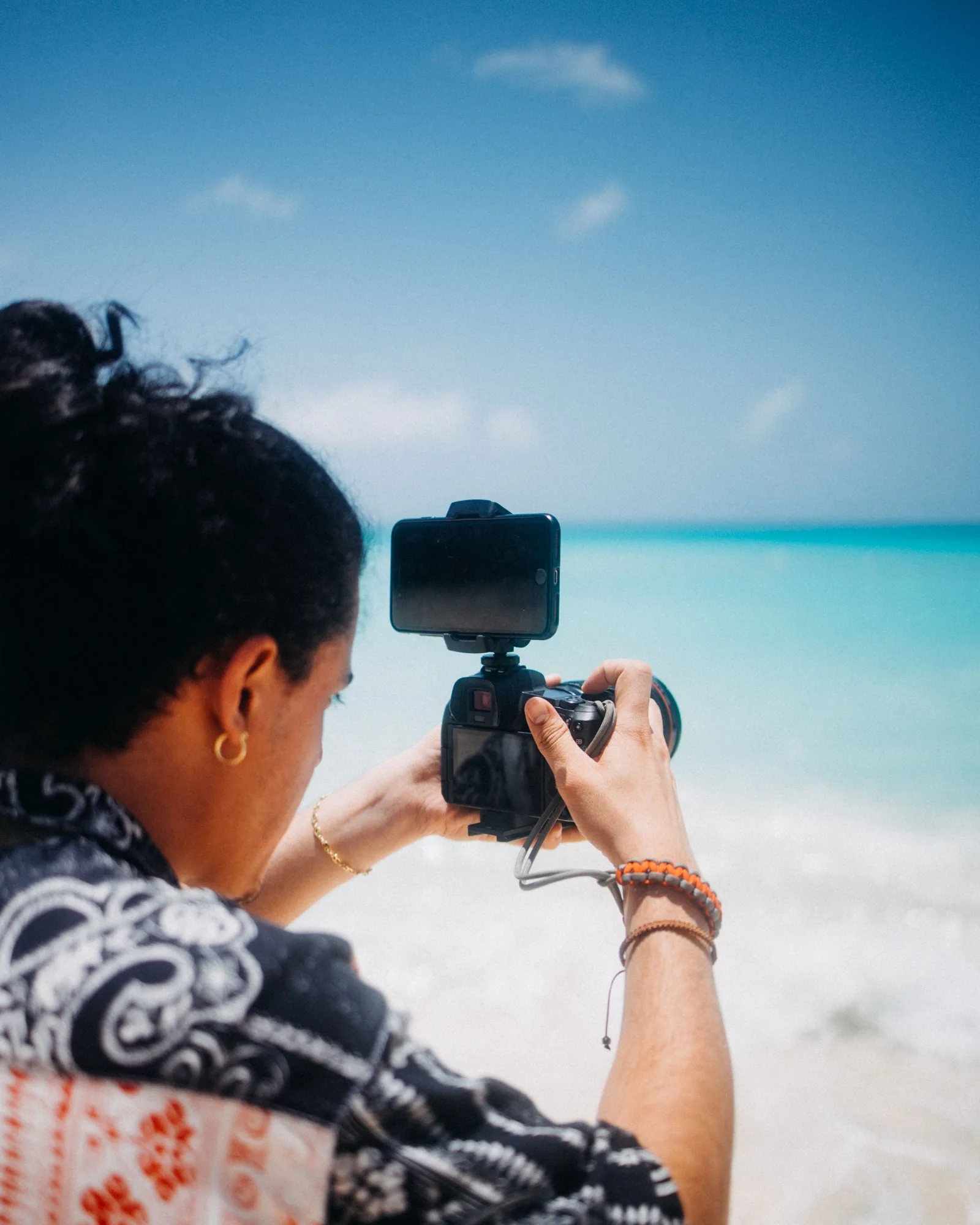
- A telephoto lens, a mirrorless or DSLR, a camcorder
- GoPro and other action cams
- A drone
- Upload video or photos you already shot — other days too, and several at once
What decides it is whether they can recognise themselves. The buyer is the person in the shot.
One wave is one clip, 3 to 120 seconds, and one photo is one listing. Uploads, and anything with a face filling the frame, get checked before they go public.
Three steps, from filming to payout
Upload
Pick the clips or photos in the app, set a price.
The rest is automatic
Clips shot with the in-app camera take their time and place from its GPS: within 1 km of a registered spot the spot’s name fills itself in; outside that, just the date. Imported video and photos take the spot and time window of the shoot you add them to. Beaches with no registered spot work too — drop a pin on the map. The blur and the watermark happen here as well.
They find themselves and buy
A surfer sees clips and photos that match their own GPS and time under “might be you”. They can also trace an area on the map and pick a time window. When one sells, the money reaches your bank account through Stripe.
Faces are blurred automatically
What happens to faces?
Every public preview is blurred and watermarked before anyone can see it. Automatically. The clean version only ever reaches the person who paid for it.
Why is this allowed?
You film surfing in a public place and sell it back to the person in the frame. That's all this is. When you publish, you state that you have the right to publish it (Terms §4). Private property, or someone who isn't there to surf, falls outside it.
What if someone wants a clip taken down?
The request comes to us, account or no account. We check it, then hide or delete it if that’s warranted. We aim to answer within three business days. The process is in Terms §12.
If there's trouble, who deals with it?
We do. Reports, takedowns and questions all come to FilmedSurf, never to you, and we answer them. Your side is simple: publish only what you have the right to publish. Terms §4 is where you warrant that, and where you cover us if the warrant turns out to be false. Film surfing from the beach and it will not come up.
A $8.00 clip or photo puts $6.80 in your pocket
In Japan the ladder is ¥300–¥3,000 (¥500 default, ¥425 to you). A$, NZ$ and € use the same 5–50.
- Price per clip or photo
- $5.00 to $50.00, in $1.00 steps. $8.00 unless you change it.
- Platform fee
- 25%. You keep 75%.
- Early filmer rate
- Sell your first clip or photo on or before December 31, 2026, and the fee is 15% on every sale up to August 31, 2027. The standard rate applies after that. You have to actually sell something; signing up doesn't do it.
- Getting paid
- Through Stripe, into your bank account. You do an identity check and add your bank details once, before the first payout.
Tell us where you film
Just an email address. Nothing else in between.